Preventing Common Carpentry Failures During Storms and Freezes
The weather can turn your dream home into a headache overnight—especially when storms and sudden freezes hit. If you’ve ever worried about water seeping into your deck, or wood trim warping from a hard freeze, you’re not alone.
At The Kitchen Carpenter, we see firsthand how the elements can turn even solid carpentry into splinters. But with the right know-how, you can keep your home’s woodwork safe, beautiful, and built to last.
How Weather Impacts Carpentry 🌧️
Let’s face it—wood and wild weather aren’t always friends. Rain, snow, and freezing temps can sneak into any carpentry job, from crown molding to garden sheds. Here’s how:
- Moisture Swells Wood: When rain gets in, wood soaks it up like a sponge. Boards swell, joints loosen, and even paint can peel away. Over time, rot sets in, especially where water pools.
- Freezing Creates Cracks: Water trapped in wood expands as it freezes. Tiny cracks become wide gaps, letting in even more moisture next time it rains or snows.
- Wind and Storms Loosen Joints: Heavy wind shakes fences, decks, and siding. Fasteners work loose, railings wobble, and panels pull apart—sometimes with a bang.
Think of your home’s woodwork like a well-made boat. It’s strong, but only if you keep out the water and brace for rough seas.
Most Vulnerable Structures in Storms/Freezes
Not all areas face the same risks. Some spots take the brunt of weather—year after year:
- Decks and Porches: Exposed to sun, rain, and ice. Gaps between boards let water drip below, where it lingers.
- Siding and Trim: Constantly hammered by wind-driven rain. Bad caulk or cracked paint lets moisture into hidden places.
- Outdoor Structures: Treehouses, pergolas, and sheds face direct exposure. Weak joinery or untreated wood can fail fast.
- Fencing and Gates: Posts rot at ground level where soil stays damp. Hinges freeze up or warp.
- Window and Door Frames: Water seeps in around aging frames, leading to rot and swelling that jams doors shut.
- Built-In Units in Mudrooms or Pantries: Less obvious, but cold snaps can make wood contract, pulling apart seams and trim.
If you’ve noticed soft spots, sticking doors, or musty smells after a storm, it’s a warning: water and freeze damage might be lurking.
Prevention Strategies Before Storms
A little work before the weather turns can keep repairs off your to-do list. Here’s how to armor your woodwork:
1. Inspect & Seal
- Check all seams, joints, and trim for gaps or cracks. Caulk as needed.
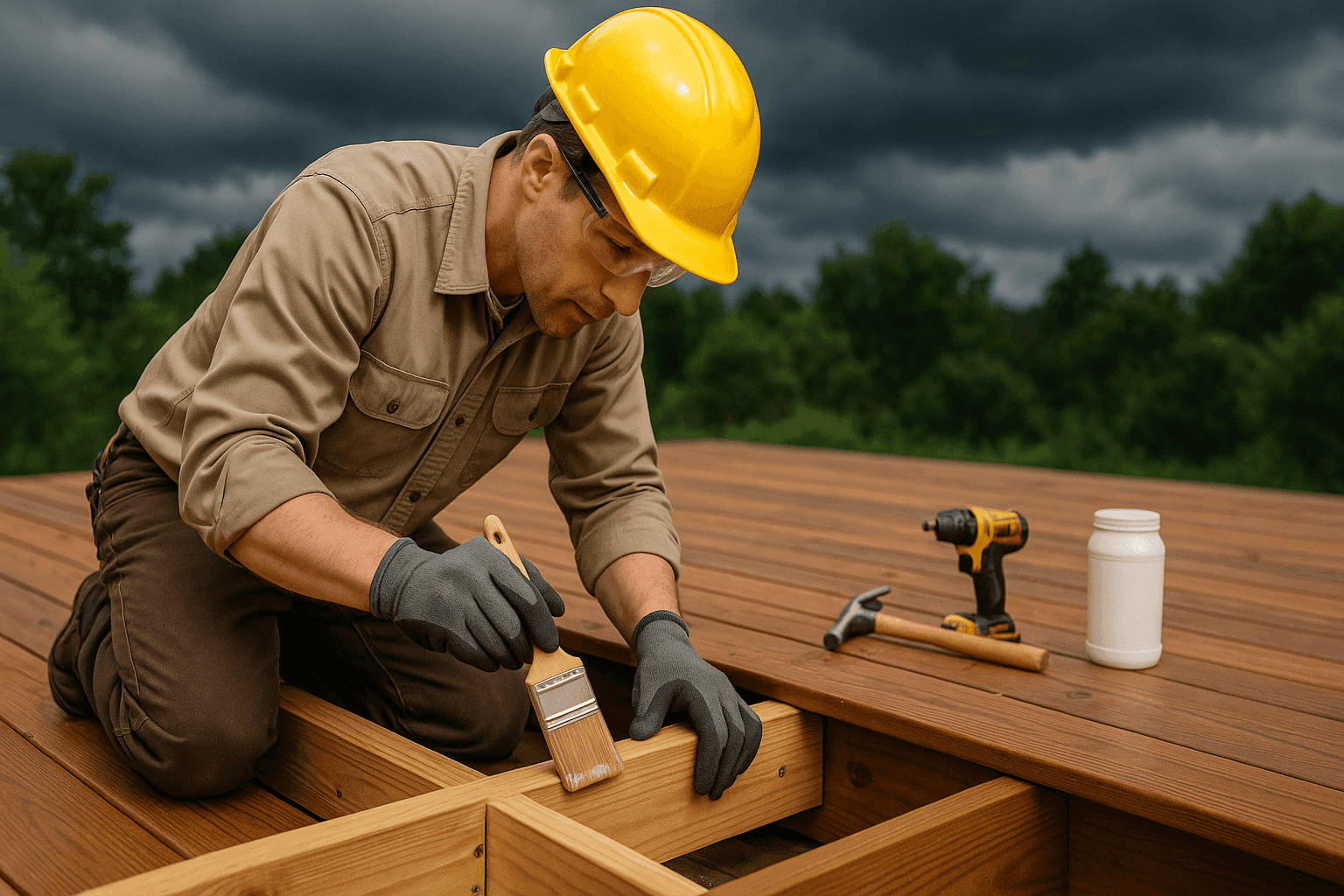
- Apply water-repellent sealant to exposed wood (decks, railings, fence tops).
- Paint or stain unfinished surfaces every 2–3 years for extra protection.
2. Improve Drainage
- Clear gutters and downspouts before storms. Overflowing water can rot siding and framing.
- Slope soil away from fences and foundations to keep water from pooling.
- Install splash blocks or gravel under decks and steps.
3. Brace and Anchor
- Reinforce railings and posts with extra fasteners.
- Check all outdoor structures (gazebos, treehouses) for loose hardware.
- Install hurricane ties or metal straps as recommended by local building codes for decks, porches, and additions.
4. Prepare for Freeze
- Insulate pipes and exposed wood in mudrooms, pantries, or garages.
- Install weatherstripping around doors and windows to prevent drafts and moisture entry.
- Store outdoor furniture and movable woodwork in a dry place before freezes.
Reference: The International Residential Code (IRC) and local building codes outline best practices for weatherproofing and anchoring exterior carpentry.
Emergency Repairs After Severe Weather ⚡
Even with the best prep, storms can surprise you. Quick action keeps small problems from turning into big, costly ones.
Top Priorities After a Storm
- Safety First: Check for downed power lines, broken glass, or unstable structures before inspecting woodwork.
- Assess Damage: Look for loose boards, warped siding, sagging fences, or water stains inside.
- Remove Wet Debris: Clear away leaves, branches, or snow that could trap moisture.
- Temporary Covers: Use heavy-duty tarps or plastic sheeting to cover exposed wood until repairs are made.
- Document Damage: Take photos for insurance or warranties.
When to Call For Help
- Major structural damage (collapsed deck, broken staircases, or large sections of siding missing).
- Signs of wood rot—spongy boards, crumbling trim, or mildew odors.
- Persistent water leaks around doors, windows, or built-ins.
A skilled finish carpenter near you can make sure emergency repairs are done safely and according to code.
Maintenance Tips for Year-Round Protection
Routine care is like sunscreen for your carpentry—it prevents damage before it starts. Here’s what to keep on your calendar:
- Twice-yearly inspections (spring and fall) of all outdoor and exposed wood.
- Reapply sealant or stain to decks, fences, and garden structures as soon as water stops beading on the surface.
- Tighten screws and replace loose hardware on gates, railings, and built-ins.
- Check for rust on fasteners and replace with galvanized or stainless steel if needed.
- Keep vegetation trimmed back from siding and fences to allow airflow and dry out damp spots.
- Schedule professional check-ups before storm or freeze season—pros spot things you might miss.
According to the U.S. Department of Agriculture’s Forest Products Laboratory, regular sealing and prompt repairs are key to prolonging wood life outdoors.
Building Codes & Weatherproofing Standards
Quality carpentry means more than nails and boards. It means meeting standards that keep your home safe in every season.
- Follow the International Residential Code (IRC) for structural strength, fastener types, and anchoring.
- Use materials rated for your climate: Pressure-treated lumber, exterior-grade fasteners, and weather-resistant finishes.
- Install flashing and vapor barriers as required around windows, doors, and decks.
- Meet local codes for wind, snow, and seismic loads—these vary, so check your local building department.
Professional carpenters stay up to date on code changes and best practices. That’s peace of mind you can’t get from DIY videos.
Why Schedule a Professional Inspection?
Some damage hides where you can’t spot it—inside walls, under floors, or behind trim. A seasoned carpenter:
- Checks for subtle signs of rot, mold, or shifting.
- Tests the integrity of structural joints and fasteners.
- Recommends solutions that fit your home, your budget, and your local weather.
Homeowners who schedule annual check-ups often avoid big surprises—and big repair bills—down the road.
FAQ: Carpentry & Severe Weather
Q: Is pressure-treated wood enough to prevent storm damage?
A: It’s a great start, but sealing and regular maintenance are still essential. Even treated wood can rot or warp if water sits too long.
Q: How soon should I repair a damaged deck or fence after a storm?
A: As quickly as possible. Waiting allows moisture in, which can make problems worse and costlier to fix.
Q: Can I use regular indoor wood finishes outside?
A: No—indoor finishes break down quickly in sun and rain. Always use products rated for exterior use.
Q: What’s the best way to prevent frozen doors and windows?
A: Keep frames sealed and insulated. Replace old weatherstripping, and fix any leaks or damage before freeze season.
Local and Seasonal Considerations ❄️
Every region has its own weather quirks—whether it’s hurricanes, blizzards, or ice storms. Custom carpentry should be tailored to your local risks:
- In wet climates, use rot-resistant species and raised footings for decks.
- In snowy areas, sloped surfaces and sturdy railings prevent snow buildup and collapse.
- In hurricane zones, bracing and anchoring are critical for porches, gazebos, and sheds.
- Seasonal temperature swings? Allow for wood movement with proper spacing and flexible caulks.
If you’re unsure what’s right for your home, a project consultation with a seasoned carpenter is the best place to start.
A little prevention goes a long way. Don’t let storms and freezes steal the beauty—or safety—of your home’s carpentry. For inspections, repairs, or advice on finish carpentry near you, The Kitchen Carpenter is ready to help.
Call The Kitchen Carpenter now — or reach us anytime at 888-871-3910 .